

Talent Spotlight
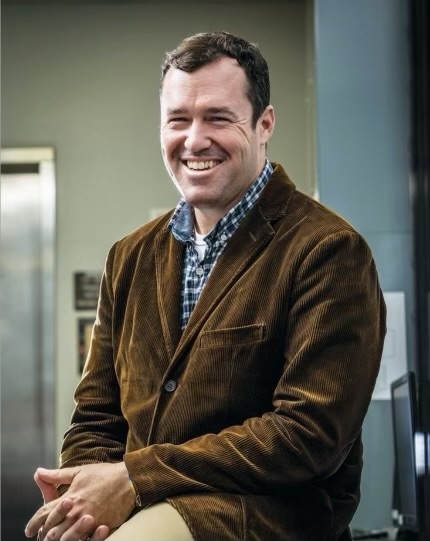
Wallis Laughrey
VP at Hadrian
VP at Hadrian
"I call it work rules to live by...Listen twice as much as you speak, always be moving forward, and start from a position that ‘everyone has good intentions’.”
I grew up in Florida, where the excitement and spectacle of space shuttle launches sparked my early fascination with space exploration. Living in a state with such close proximity to the Kennedy Space Center meant that space was always a tangible presence in my life. I remember school trips to watch shuttle launches, which were key moments that fueled my interest in space from a young age. However, during high school, my interest waned until my father, who was a high school guidance counselor, suggested I consider the United States Air Force Academy (USAFA). His experiences from the Vietnam War era and his insight into the benefits of military service highlighted USAFA as an opportunity for a free, high-quality education set against the beautiful backdrop of Colorado. This decision was less about a clear vision for my career in the military and more about exploring opportunities beyond what I knew.
My time in the Air Force was transformative, driven by experiences that emphasized autonomy, creativity, and critical thinking. These roles allowed me to focus on outcomes and cultivate a culture of innovation. I was fortunate to be assigned to the Headquarters for what was then Space Command, providing a unique perspective on space operations. My career journey has spanned various roles in traditional aerospace and defense companies, early-stage startups, and innovative firms like Anduril. These experiences shaped my focus on space missions and technology development, highlighting the frontier of technological evolution. Working in diverse environments has taught me to build conviction and execute projects effectively, even under tight constraints. My background is a testament to the power of embracing opportunities and learning from a wide range of experiences, which have shaped my path in the aerospace and defense industry.
Hadrian
- present
Voyager Space
Anduril Labs
Raytheon
Lockheed Matin
US Air Force
1
2
3
Use the resources already sitting in front of you. Industry publications, online courses, and professional networks compound your learning beyond any single mentor relationship.
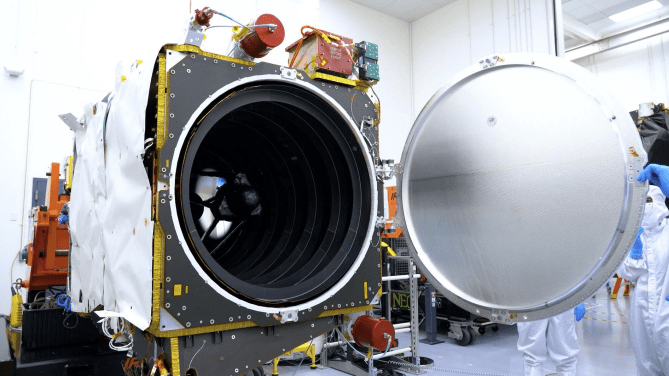
Maxar hardware integration for first Legion satellite in late 2021. Photo: Maxar
I'm particularly proud of team achievements throughout my career, especially our work on the WorldView Legion satellites, where Raytheon played a key role in developing advanced optical systems for Maxar. This project was a collaborative effort involving a young, dynamic team that delivered high-performance satellite imagers designed for applications in environmental monitoring and national security. Our success was built on innovation and a commitment to excellence under tight constraints, showcasing the impact of teamwork and resilience. The imagery now provided by Legion is truly eye-watering, demonstrating the culmination of our efforts and expertise in areas like silicon carbide optics and digital focal plane arrays, which were pioneering at the time.
The most rewarding aspect of my career has been working with talented individuals on missions that have a meaningful impact on the world. I value aligning people and missions with customer needs, which leads to fulfilling and sustainable outcomes. This alignment fosters a sense of purpose and satisfaction, knowing that our work contributes positively to societal and technological advancements. Conversely, navigating the political and bureaucratic challenges within large organizations can be frustrating. However, maintaining a focus on genuine mission alignment helps mitigate these challenges and fosters a collaborative culture that prioritizes long-term success over short-term gains.
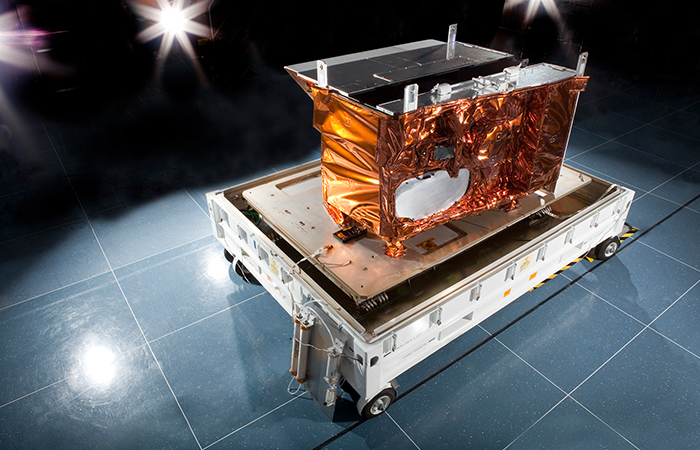
I oversaw both space and ground on Raytheon's Visible Infrared Imaging Radiometer Suite (VIIRS). The first VIIRS launched back in 2017.
A significant factor in my career progression has been the leaders who recognized my potential and provided challenging opportunities that allowed me to grow and excel. I learned to align my efforts with organizational goals and understand market dynamics, which has enabled me to make informed decisions and drive strategic outcomes. Embracing challenges and thoroughly understanding the intricacies of each situation have been crucial in building trust and making impactful contributions. Additionally, my ability to foresee and plan for potential challenges has allowed me to navigate complex environments successfully, ensuring alignment with the overall strategic direction of the organizations I have been a part of.
If you asked me this 10 years ago, my answer would be very different. Then, it would have been specific to a broad set of Science, Engineering and Math courses that provided the breadth and depth to be able to work in multiple different markets. But, at this point in my career, the parts of my education that have had the greatest impact are in areas where answers are not always black and white or where problems are still yet to be solved. Learning how to approach problems with a logical mindset and understand complex tradeoffs. As an example, I went to school for a Masters in Public Administration to learn about how the government really works. And, focused one of my Masters on Product Development Engineering to blend the design creativity with engineering depth. These definitely equipped me with the tools to analyze diverse perspectives and make informed decisions, applying first principles to problem-solving. Yet, my persistent desire and ability to learn independently have been invaluable assets in my career development, fueling my passion for innovation and exploration.
I see promising career opportunities emerging in foundational disciplines such as data and information science, advanced manufacturing and automation, and AI/ML, computer vision, and sensor technologies. These fields are at the forefront of innovation and are critical to advancing aerospace and defense industries, as they enable the development of smarter, more efficient systems. The emergence of commercially driven markets, particularly those influenced by pioneering companies like SpaceX, presents new opportunities for innovation and growth. These opportunities are not just in traditional sectors but also in newer applications that leverage these technologies to address pressing global challenges, from climate change to national security.
The space industry is undergoing its third wave of innovation. Initially driven by GPS, satellite communications, and missile warning technologies, followed by small satellites and companies like SpaceX, this wave is characterized by new commercial markets and advancements in both launch and satellite technology. While the potential for innovation is vast, it's important to remain cautiously optimistic about which developments will ultimately succeed. The emergence of a commercially driven market has created exciting opportunities for those passionate about space, but it's essential to approach these opportunities with a measured perspective, focusing on sustainable, long-term success rather than short-lived gains.
Join 50,000+ professionals already inside the space economy's most active network.