
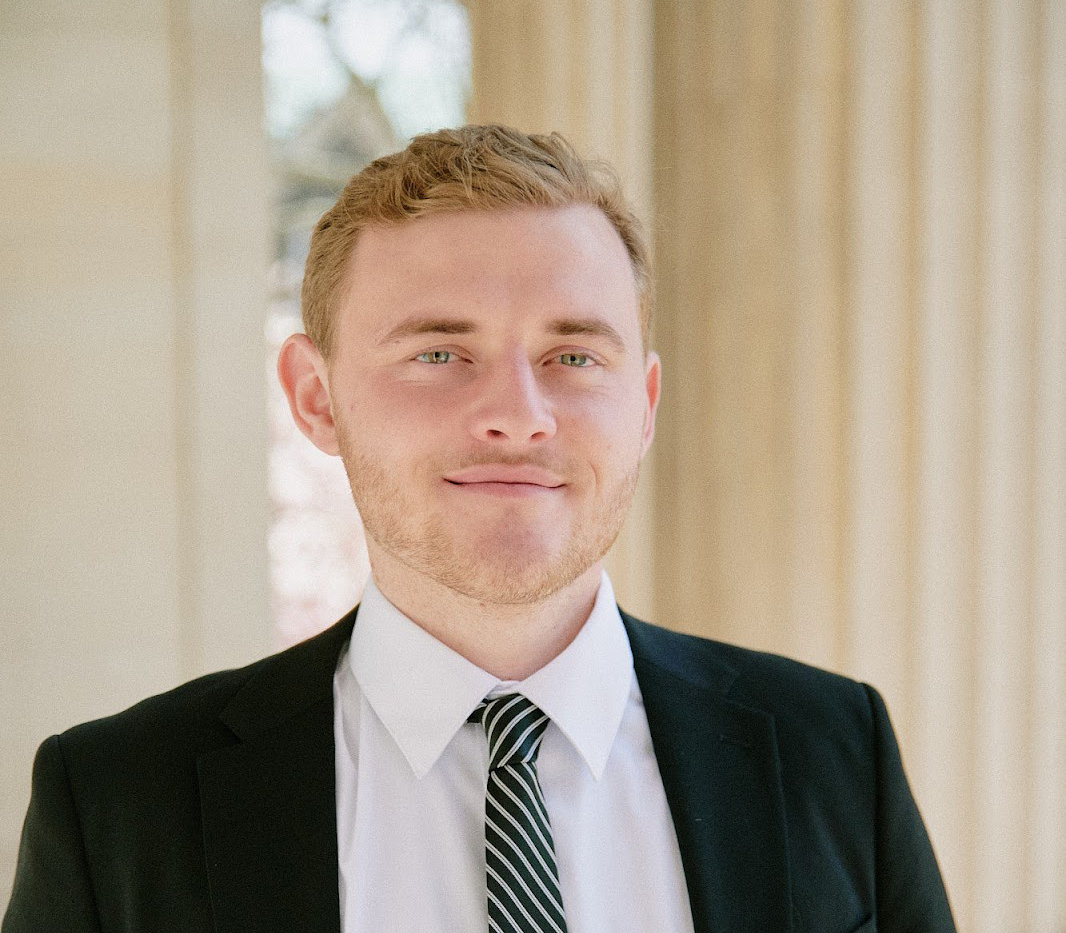

Talent Spotlight
"Taking initiative and diving into problems without being asked to is an essential step to getting ahead."
Ever since I can remember, I have been fascinated with space. Growing up I would discuss the mysteries of the cosmos with my mom who is an astrophysicist. My name “Tycho” actually comes from the famous Danish astronomer, Tycho Brahe, who lived in the 1500s. While I did not follow in my mom’s exact footsteps, this love of space led me to pursue an education in mechanical engineering at Columbia University. Instead of analyzing the images taken by telescopes and building models of the galaxy, I wanted to build the spacecraft themselves.
I got my first taste of this at the Columbia Space Initiative (CSI), a student club that builds rockets, satellites, and astronaut tools, advances space policy and mission concepts, and has flown biological experiments to the International Space Station and on a hyperbolic flight. As soon as I joined CSI, I knew that I had found something special: the shared passion and dedication that all club members had was inspiring. As a first-year on the rockets team I was put in charge of designing and manufacturing a custom pyrovalve. By the end of my sophomore year, I was co-president of CSI and co-leading the fluids subteam on the CSI Rocketry mission. I was in charge of researching, designing, analyzing, manufacturing, and testing the entire fluids system of our hybrid rocket. After failing to launch our rocket in the summer of 2022, we went back to the drawing board and implemented significant improvements that allowed us to successfully launch Columbia’s first-ever rocket at the Spaceport America Cup in June 2023. Now, as co-lead of the Rocketry team, I oversee the overall architecture of the rocket and manage each subteam as we hope to launch an even better rocket in the summer of 2024.
EraDrive
- present
Columbia Space Initiative
Space Capital
Vast
Along with my personal technical accomplishments, the highlight of my career so far has been my leadership at the Columbia Space Initiative (CSI). I am most proud of the ever-growing community that I helped foster through meaningful improvements in culture and accessibility. I established a mentorship program with different affinity groups, an onboarding program with a rocketry crash course and new member projects, many social bonding events, and an anonymous feedback form. As a product of these efforts, I found myself working with motivated people brought together by the common goal of building incredible space projects. No one is paid to be there and yet hundreds of students volunteer many hours to design a small satellite or manufacture a rocket nozzle. This environment leads to levels of ingenuity, camaraderie, and perseverance that I want to replicate through the rest of my career.
Evidently I am not alone in this belief because during my tenure CSI grew from a membership of 50 to over 200 and is now the largest engineering club on campus. I have also overseen a 400% increase in our annual operating budget to $75,000 and technical achievements ranging from hybrid rocket launches to NASA CubeSat launch contracts. To accomplish all of this, I navigated the intricacies of the Columbia administration university-wide and worked with people ranging from the department director of finance to the dean of engineering. The countless hours that I have spent on CSI, with all its ups and downs, have shown me the power of a welcoming community of passionate people paired with a persistent desire to make dreams a reality.
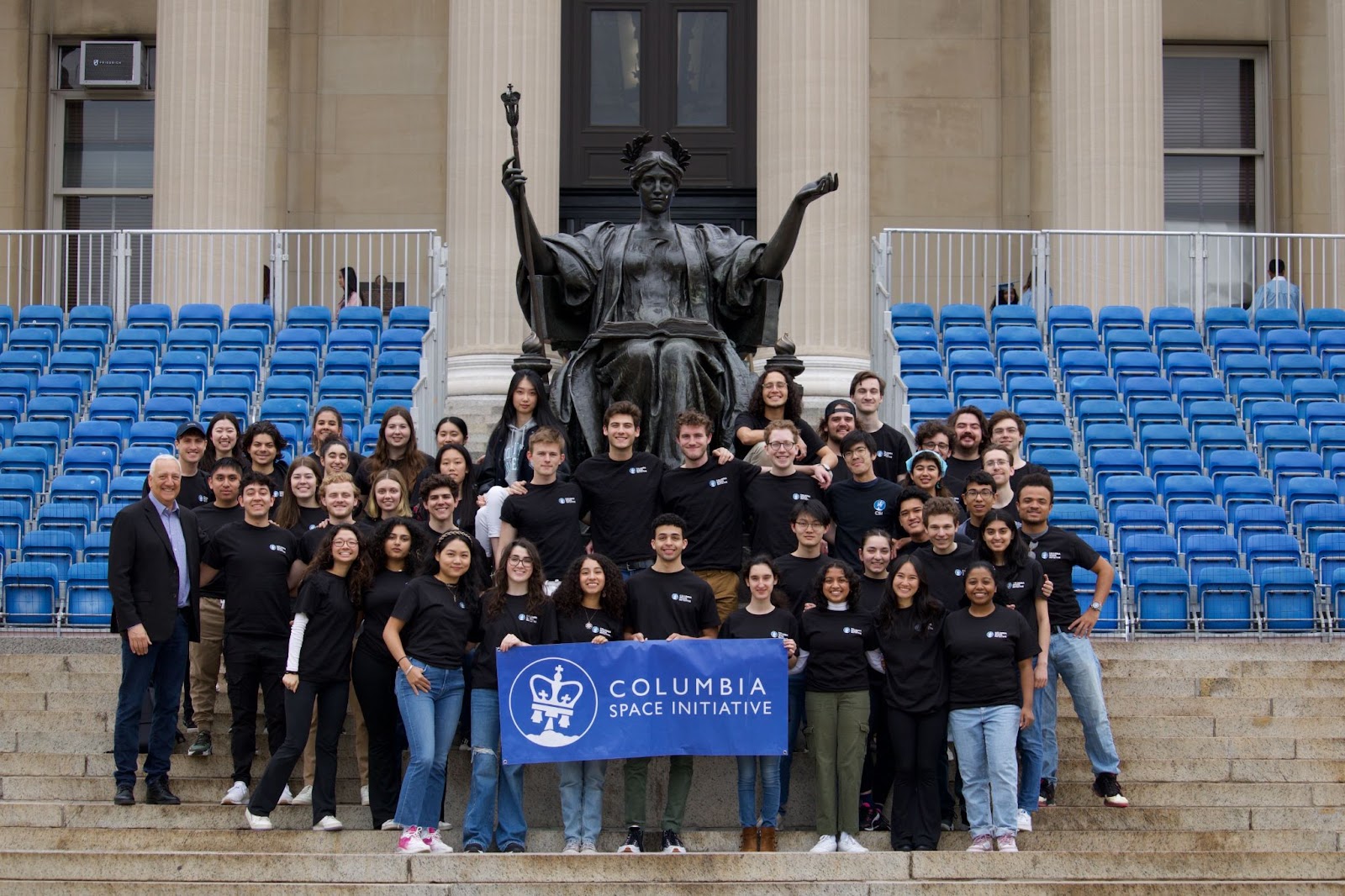
The Columbia Space Initiative with their advisor, former NASA astronaut Michael Massimino
1
Reach out to people doing the work you want. Anyone in the role you're aiming for is worth a conversation, and the ask is smaller than it feels.
2
Nobody's too senior to ask. Entry-level newcomers and seasoned CEOs were equally willing to talk about what they're passionate about.
3
Find mentors wherever you are. People who've navigated a version of your path already have the advice you're trying to reverse-engineer.
Looking back, one of the most critical steps I took, although it was not fully intentional, was being proactive and willing to take on less glamorous roles. By the end of my first year at CSI, I was determined to one day become President and help grow and improve the club. I knew that I wouldn’t win the election for President with just one year of experience so instead I ran for Treasurer. As Treasurer I took on more and more responsibilities along with the more tedious tasks of putting in orders and trying to fundraise. This experience gave me a wealth of knowledge of the intricacies of Columbia’s administrative bureaucracy and ways for CSI to improve, which I later implemented as President to some success. Taking initiative and diving into problems without being asked to is an essential step to getting ahead.
At CSI I had the opportunity to get my hands dirty in designing, building, testing, and eventually launching rocket hardware. I also gained invaluable leadership experience as Co-President and then Co-Lead of the Rockets team. All of these experiences are directly transferable to real-world space engineering firms.
So far, I have most enjoyed meeting and working with incredible people that are passionate about the same things I am. The space economy really is a small world where everyone knows everyone. Making connections, discussing the most recent test launch or stealth emergence, and hearing about what people are most excited about are some of my favorite things to do.
The most frustrating part of my career so far has been all the headaches that come with student clubs. From budget cuts to travel restrictions to arbitrary rules, it was challenging to navigate the obstacles facing a space club with growing membership and goals.
As I start my next chapter at Stanford, I would love to connect with anyone that is interested in commercial space from discussing new ideas to examining the current state of the industry. My LinkedIn is https://www.linkedin.com/in/tycho-bogdanowitsch/ and my email is tychojb@gmail.com. During my Master’s program, I hope to deepen my knowledge in the field of GNC and explore early-stage space startups.
Join 50,000+ professionals already inside the space economy's most active network.