

Talent Spotlight
Garima Gupta
Director of Mission Management at Impulse Space
Director of Mission Management at Impulse Space
“The best work is always done in an environment that tolerates mistakes and encourages lessons learned. Always try to do better today than you did yesterday. I encourage new engineers to have this same approach.”
I was born in India and lived there for 6 years before my parents immigrated to the United States. Since then, I’ve lived all over the country, but for the longest time, I lived in Florida, roughly 2 hours from Cape Canaveral, where the Kennedy Space Center is. I remember I went there for the first time when I was 9 years old and so many women were highlighted like Valentina Teresokova, Sally Ride, and Eileen Collins, and I remember just being incredibly inspired. There were exhibits about Mars; and I remember seeing they had this really ambitious thought at the time, this was roughly 2001, that we would ‘be on Mars by 2020,’ and I thought “Oh, I’m going to be old enough to go to space by then,” and that thought solidified my future. Every decision I made from that point forward regarding my career was centered around this thought. The goal of wanting to go to space.
I was very lucky to have parents that were supportive. They would take me to aviation summer camps at Cecil Airfield. I also went to a summer science program in New Mexico where we got to study Near-Earth Asteroids and determine their orbit. I somehow convinced them to enroll me in flight lessons, so I was actually able to earn my private pilot’s license in high school.
Impulse Space
- present
Varda Space
Enabling mission success as a central point of contact for all internal engineering disciplines, subcontractors, regulators, and customers
SpaceX
SpaceX
1
Space is unforgiving. You don't have to be. High risk and high reward doesn't mean holding people to the same zero-tolerance standard the hardware demands.
2
Tolerate mistakes to get the best work. Engineers do their strongest work where failure gets captured as a lesson instead of punished.
3
Beat yesterday. Do better today than you did yesterday, and keep the interval that short.
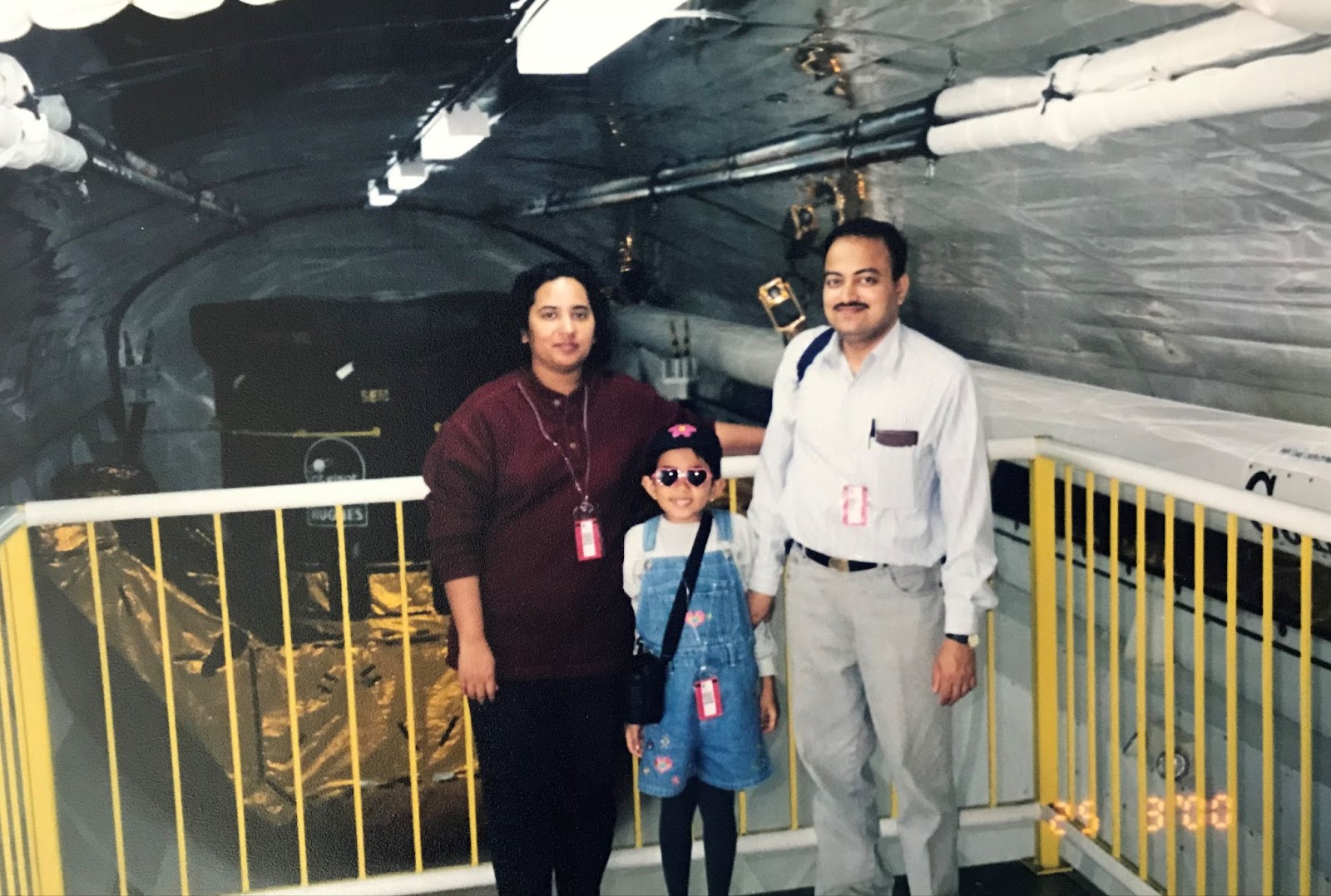
First trip to Kennedy Space Center
From there, I decided to go to university at Caltech. It is such a critical place for the history of science and space exploration, so it was a natural choice for me. They had a really interesting program called SURF (Summer Undergraduate Research Fellowship) where you could work with professors on campus or at JPL and be involved with projects. I did this for all three summers that I was at Caltech. The project that I worked on the longest was in the Geological and Planetary Sciences department.
Most of the missions to Mars have generally been connected by trying to find the existence of life beyond Earth and focused on the existence of water on the planet. One indication of a wet, conductive surface is cloud-to-ground lightning. In order to prove that there was once lightning, and thus water, on the surface of Mars, we were looking for something called ‘isothermal remnant magnetization’. That means that all of the magnetic dipoles in the rock that you are studying, align in a certain way, and you can determine this by taking a magnetometer to it. My project was building a stage that could move in three axes to study a rock, and it was intended to mimic an instrument that would be placed at the end of an arm of a Mars rover. So, we took this stage that I built out in the field in Arizona, Nevada, and New Mexico and we would study petroglyphs, which were rocks with markings on them from ancient civilizations there. Long story short, this is one of the coolest things that I did in undergrad. It was the most applicable with what I wanted my career to be. At Caltech, most of what we learned in class were fundamental and foundational, not necessarily how to apply it in the world. These types of projects are what opened my eyes to the possibilities that might be with what I wanted in terms of next steps.
I wasn’t sure if I wanted to proceed into a PhD or get a job in the industry, so I went to Georgia Tech for my masters for a bit of a different experience. Where Caltech was heavily focused on research and academia, Georgia Tech was much more industry-focused and more applied learning, which was really appealing to me.
I started networking with people, trying to find a connection at SpaceX, mainly because it was at the forefront of the space industry. I took a bunch of combustion and heat transfer classes both at Caltech and at Georgia Tech. I have always had an interest in and always wanted to work on boost propulsion engines. So, I reached out to the leader of the propulsion team at SpaceX (who also happened to be a Caltech alumnus), and made my interest clear in terms of where I was coming from and why. We had a couple of calls prior to a formal interview and then we took it from there. I landed the internship around the same time I started my graduate program. I learned more in that 3 month internship than I ever did in school and was so energized from the experience that I ended up turning that internship into a full-time position.
At SpaceX I had really great mentors, who encouraged me and empowered me to do things that I never had before. This was my first foray into the world of engineering. I had done many school projects and research programs, but this is where I learned what real-life engineering looks like, and I knew I wanted to continue to be a part of that story.
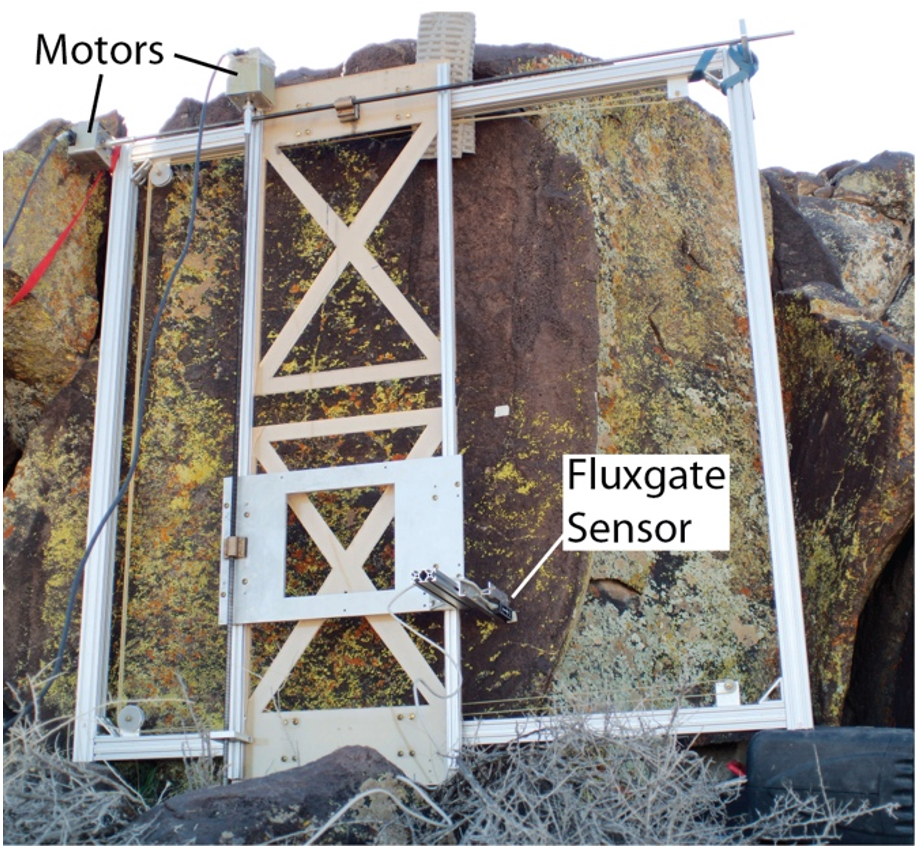
Scanning stage I built through the Caltech SURF program – used as a proof of concept on Earth, published in ScienceDirect.
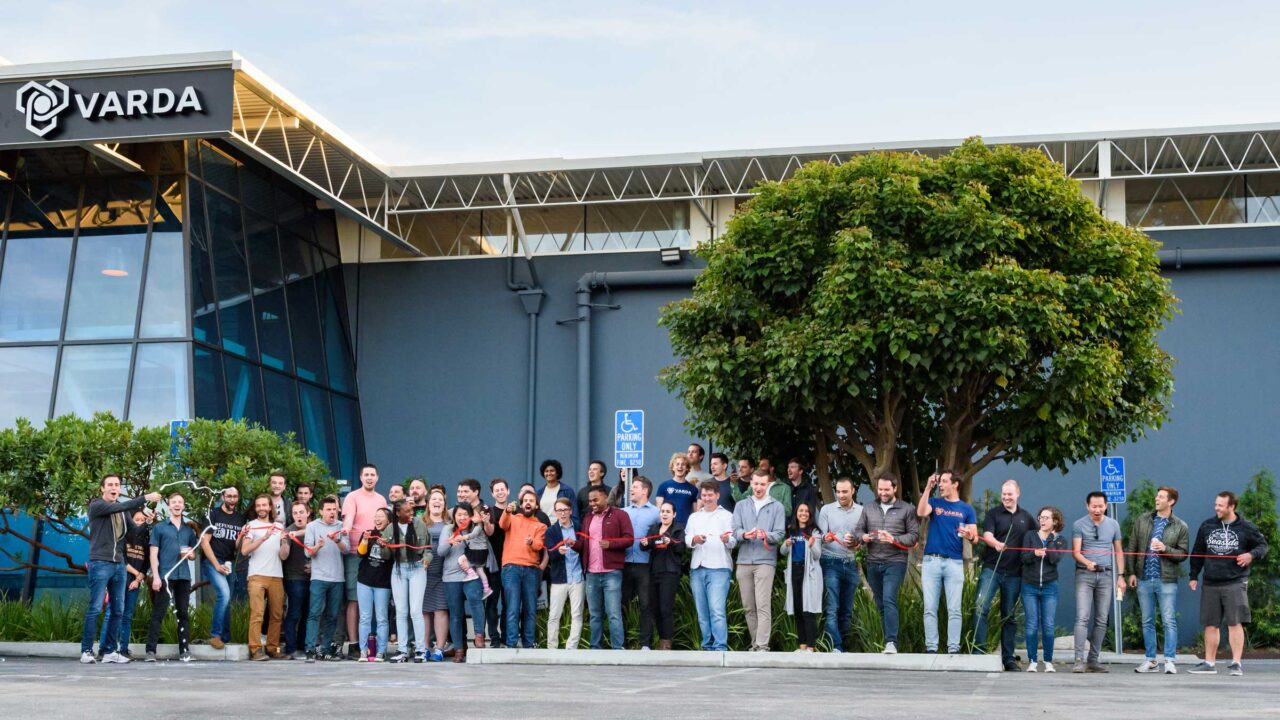
Team at Varda
I was at SpaceX for seven years, the first five on the Falcon 9 first stage engines. I started as an individual contributor and eventually became a lead. My team and I were the primary points of contact for any hardware or software issue on the M1D engines through their entire lifecycle: build, test, integration, flight, recovery, refurbishment. I got to see the engine as a complex system from beginning to end. I enjoyed taking something start to finish, and I still do at Varda.
At year five my rate of learning in propulsion had flattened. The work was still exciting and I was still solving problems, but I'd hit my limit on how much and how quickly I could learn. I wanted a more generalist role, so I asked a lot of questions of people in different departments and moved to Mission Management, part of Customer Ops and Integration. I supported national security programs and launch vehicle certification, which built a centralized knowledge base of the launch workflow end to end, from contract signing to payload deployment.
After seven years, same people and same topics, having done what I set out to do, I was ready for a change and wanted to look at spacecraft. A lot of people I knew who'd left SpaceX had gone to Varda, so I reached out to ask what they were working on. They suggested I come for a tour.
The culture was the hook. It's still a small company, so the ownership appealed to me coming from a larger one, and the prospect of starting from scratch and building from there solidified it. Varda has no underlying expectation of what you have to do to get ahead. I joined SpaceX young, with a lot to prove and a reputation to build. That reputation came with me here, and I immediately felt respected and listened to. No egos. You can talk to anyone and feel empowered to say what you think.
I'm Senior Program Manager now, similar to Mission Management in that I own the end-to-end success of a program. Which program varies. Right now I'm program manager for re-entry, coordinating our external commercial and regulatory partners to get our capsule in space back to Earth. Making sure everyone gets to the finish line at the same time.
Two, both at SpaceX. Arabsat 6A was the first Falcon Heavy mission for a customer, and our first Block 5 Falcon Heavy. I led it for the M1D Engine Operations Team, which meant taking on an upgraded engine, an entirely new thrust structure, and new supporting systems at once. It sticks out as the first time I felt truly independent and confident in the technical decisions I was making. And I got to sit in Firing Room 4, where controllers sat for Apollo and Space Shuttle missions. The second is more recent: launching the flagship mission for the Space Development Agency. As mission manager I had a bird's-eye view of the whole process and saw the work of teams across the company I'd never worked with. Launch was only the first step for those payloads, which had an entire life ahead of them in space, but watching them deploy was special. Knowing I played a small role in the flagship mission for a new government agency was really cool.
The SURF program in my undergraduate studies gave me a portfolio of work and the ability to stand out from the competition. I also had an internship with Northrop Grumman that gave me more hands-on experience. My transition from propulsion to mission management at SpaceX made me a more versatile and well-rounded engineer while giving me experience with indirect people management. This prepared me for the role at Varda and being at the forefront of the space industry.
The educational foundations are really important for a highly technical engineering role. It is important to seek out every opportunity to apply what you have learned to real-world experience. This is what I did when I was at Caltech. They did not have a rocket team at the time, so I joined the robotics team. I also tried to get my hands on as much experience as possible in the machine shop. I continued to do this at Georgia Tech. I believe that it is important to seek out hands-on experience whenever possible.
I enjoy the responsibility that comes with extreme ownership. I take pride in seeing projects through from start to finish, and every role I've taken has allowed me to do that. However, I also find that this can be a double-edged sword, as I'm terrible at drawing boundaries and can become consumed by my work. I find it difficult to separate my work life from my personal life. I'm working on finding a better balance. I'm trying to set more boundaries and to take more time for myself. I'm also trying to find ways to relax and de-stress outside of work.
Join 50,000+ professionals already inside the space economy's most active network.