Prediction vs. Reality: How the Space Economy Actually Evolved in 2025
Making predictions is easy; facing reality is where the real learning happens. We’re revisiting our 2025 forecast to track the major movers of the year -- including the rise of GeoAI, intensifying launch competition, and the incumbents' struggle to adapt. Dive into the analysis to see why we gave ourselves a "B+" and what these trends signal for the future of orbit.
FireSat’s First Launch – A Milestone for Wildfire Detection
By Chad Anderson, Founder & CEO
A year ago, I published in Yahoo Finance 10 predictions for the space economy in 2025. Making predictions is easy, but stress-testing them against reality is harder. There’s real value in revisiting forecasts to see which assumptions held, how quickly they played out, and how the space economy evolved as those trends moved from theory to execution.
2025 was monumental: record launch cadence, a commercial moon landing, and record capital inflows. But how did my specific predictions hold up?
1. The Next Four Years (Grade: A)
I predicted greater focus on promoting the space economy and commercial integration into government programs, with SpaceX as the biggest beneficiary. This materialized as expected. The administration has embraced commercial space at every turn, and SpaceX's dominance has only accelerated. Jared Isaacman, a frequent SpaceX customer, has been confirmed as NASA administrator -- a telling indicator of how deeply intertwined commercial space and government priorities have become.
2. Starship Comes Online (Grade: B)
I predicted Starship would reach orbit and begin operational flights in H1 2025, carrying Starlink satellites. The reality was more complicated. SpaceX flew four Starship missions, making significant progress, but operational flights with Starlink V3 satellites haven't materialized yet. The company just completed Flight 11, its final Version 2 test, and is now transitioning to Version 3, which will be "used for the first Starship orbital flights, operational payload missions, propellant transfer, and more." Progress? Absolutely. Timelines? Optimistic.
3. Mars or Bust (Grade: Incomplete)
While Starship development continues and Mars ambitions remain central to SpaceX's narrative, 2025 was more about working through Starship's test program than announcing concrete timelines.
4. More Competition (Grade: A)
Amazon's Leo (fka Project Kuiper) launched its first production satellites and now has over 150 spacecraft in orbit, with service expected in early 2026. Blue Origin's New Glenn reached orbit on its first attempt in January and successfully landed its booster on its second flight in November. The competitive landscape I predicted is materializing rapidly.
5. Space Superiority (Grade: A)
Defense investment has surged as predicted. GEOINT already represents 86% of 2025 funding in the applications layer. The integration of AI with space-based data is revolutionizing capabilities, and government spending continues to accelerate across GPS resilience, satellite communications, and space domain awareness.
6. Incumbents Adjust (Grade: C)
I predicted Boeing and Airbus would sell their space businesses. Boeing has explored selling portions of its portfolio, including Starliner, but no divestiture completed. The trend is real, but my timing was aggressive. Meanwhile, Airbus, Leonardo and Thales agree to combine their space divisions under Project Bromo, a new European champion to compete with SpaceX. Questions remain, however, whether the combination will be any better than the sum of its parts.
7. GeoAI (Grade: A)
AI integration with geospatial data is transforming the space economy. Google's AlphaEarth Foundations marked a watershed moment. Big Tech's race to develop AI systems that understand physical space depends on satellite data, just as predicted.
8. Orbital Traffic (Grade: A)
With SpaceX launching 3,000+ Starlink satellites in 2025 alone, and constellations from Amazon and China ramping up, orbital congestion is a growing concern. The push toward privatized coordination is underway. Kayhan released the Satcat Product Suite, providing real-time data for 60,000+ orbital objects and covering 90% of operational satellites. The recent executive order marks a significant shift in U.S. policy, moving away from free, government-provided data toward a paid, commercial model.
9. Climate and AI (Grade: B)
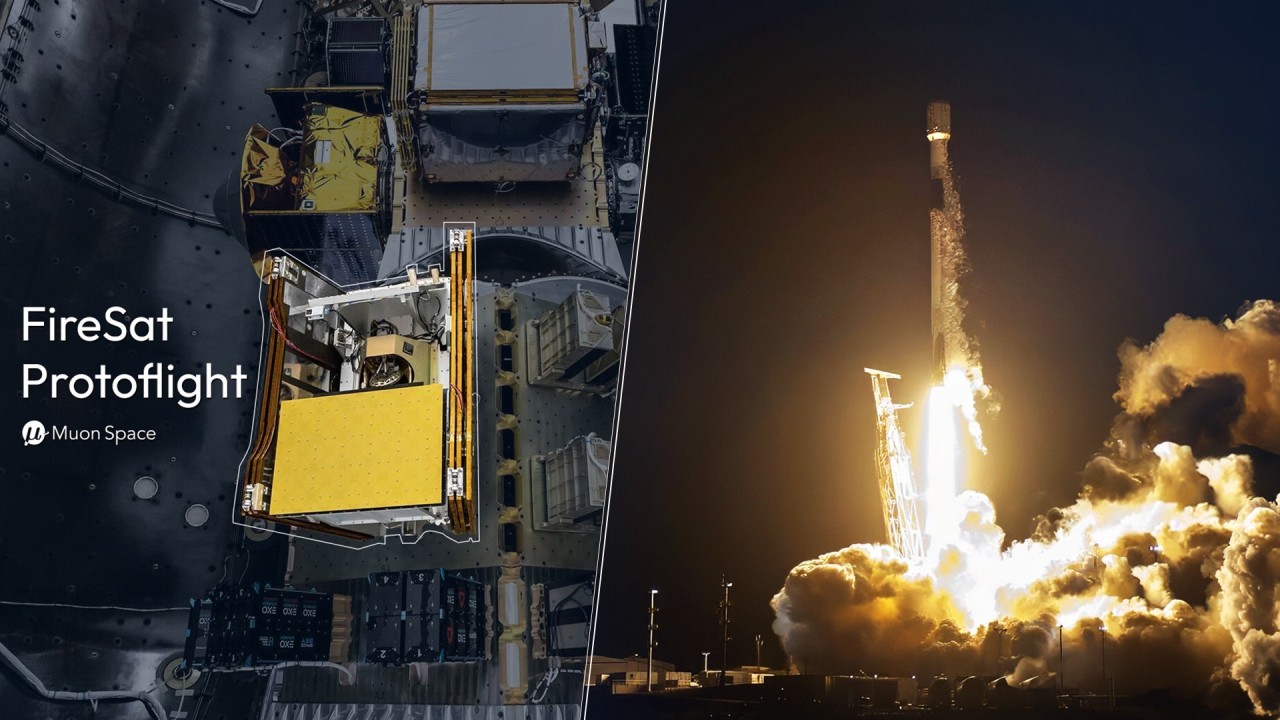
Federal priorities have shifted as expected. Private capital has stepped up to fill gaps, and the insurance industry's increasing reliance on satellite data amid extreme weather validates the market. The announcement of FireSat in 2025 marked the transition of the project from an ambitious concept to an active, on-orbit reality. The first FireSat satellite was launched this year and released its first images. TIME Magazine named FireSat one of the Best Inventions of 2025, citing its potential to revolutionize how the world manages "megafires."
10. Commercial Stations (Grade: B-)
I predicted Vast would launch its Haven station in 2025. The company made remarkable progress: completing its qualification article, passing structural tests, and launching its Haven Demo pathfinder satellite in November. But the full Haven-1 station launch has slipped to May 2026.
Overall Grade: B+
I got the big themes right: SpaceX dominance, emerging competition, defense demand, AI integration, and commercial space stations. My timing on specifics, ie. incumbent divestitures, Starship operations, Vast's launch, was optimistic. In space, as in venture capital, things take longer than expected but happen faster than imagined.
.avif)